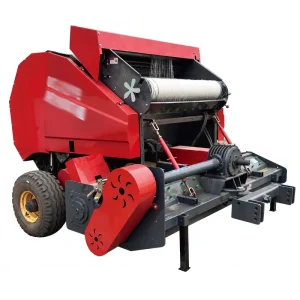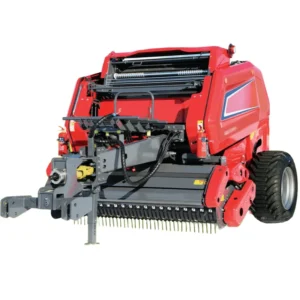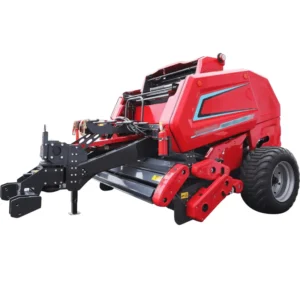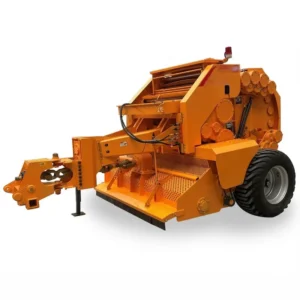
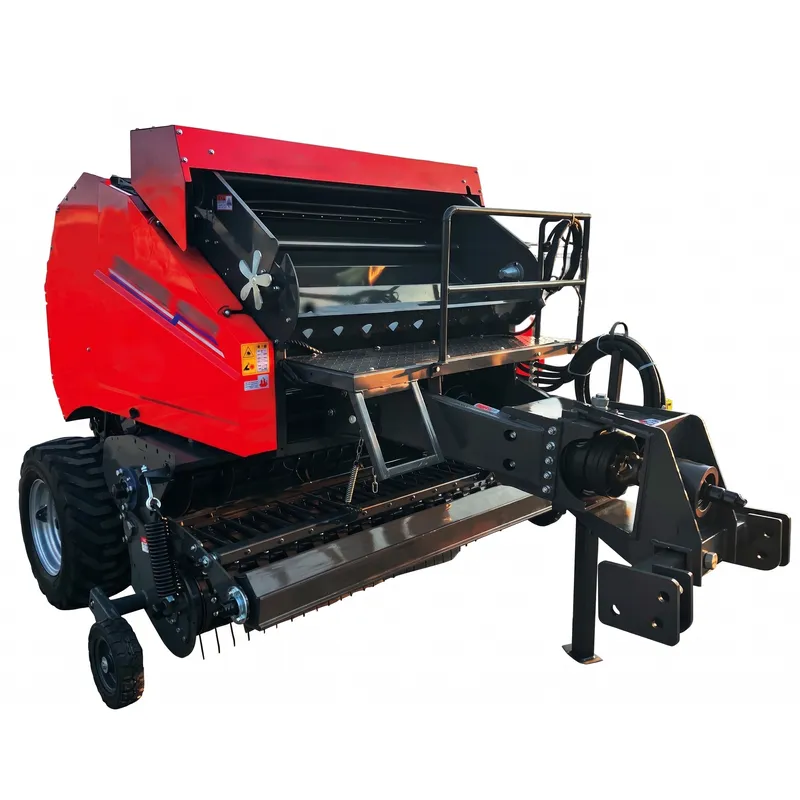
9YQ-1950 Trailed-type Round Baler for Tractor
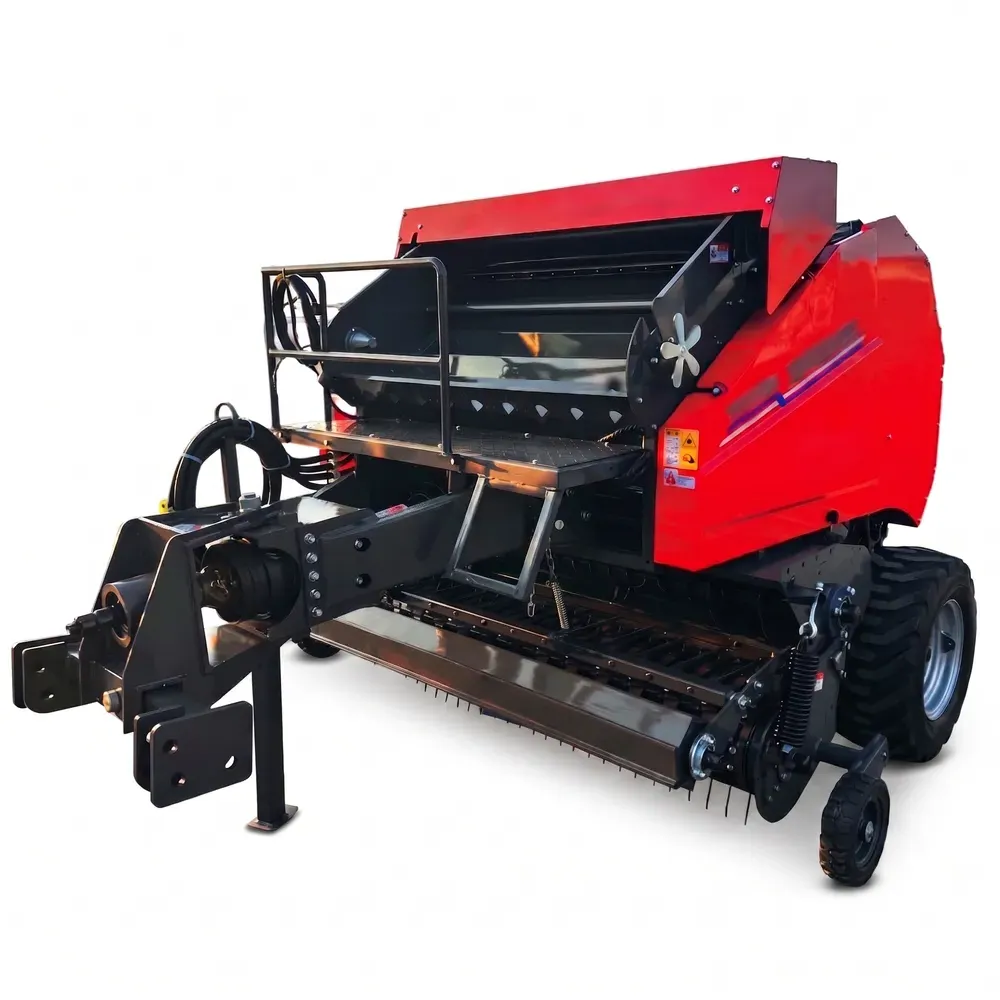
The 9YQ-1950 Trailed-type Round Baler is a high-capacity trailed-type round baler engineered for modern agricultural operations. With a 1,950 mm picking width, 18-roller compression chamber and fully automatic net-wrap system, it converts corn stalks, wheat straw, rice straw and fresh silage into tight, uniform bales of up to 1,000 mm diameter, reducing crop residue handling time and converting waste into high-value animal feed, bedding or biomass fuel.
The 9YQ-1950 Trailed-type Round Baler is a high-capacity trailed-type round baler engineered for modern agricultural operations. With a 1,950 mm picking width, 18-roller compression chamber and fully automatic net-wrap system, it converts corn stalks, wheat straw, rice straw and fresh silage into tight, uniform bales of up to 1,000 mm diameter, reducing crop residue handling time and converting waste into high-value animal feed, bedding or biomass fuel.
Designed for both small and medium-sized farms, this round hay baler pairs with tractors from 36.7 kW to 110.3 kW, making it one of the most versatile compact round baler solutions on the market. Whether you are collecting pasture grass for silage, bundling alfalfa for export, or clearing rice paddy straw after harvest, the 9YQ-1950 delivers consistent throughput season after season. The machine weight of 2,385 kg reflects a heavy-duty build that stands up to demanding field conditions while the spring-tooth pickup and screw continuous feeder mechanism maintain smooth crop flow without clogging.
Product Specifications
| No. | Item | Unit | Specification |
| 1 |
Model Name |
/ |
Model 9YQ-1950 Round Baler |
| 2 |
Hitching Method |
/ | Trailed |
| 3 |
Picking Width |
mm | 1950 |
| 4 |
Feed Inlet Width |
mm | / |
| 5 |
Picker Structure |
/ | Spring Tooth Type |
| 6 |
Feeder Structure |
/ |
Shift Fork Feeding Mechanism + Screw Continuous Feeding Mechanism |
| 7 |
Type of compressing bale chamber |
/ | Roll drum type |
| 8 |
Width of the compressing room |
mm | 1250 |
| 9 |
Diameter of compression |
mm | Φ1000 |
| 10 |
Quantity of Roll - Pressing Working Components |
pc | 18 |
| 11 |
Diameter of Roll - Pressing Roller |
mm | Φ190 |
| 12 |
Bundling Type |
/ | Automatic net wrapping |
| 13 |
Matching power range |
kW | 36.7 ~ 110.3 |
| 14 |
Overall Dimension (L×W×H) |
mm | 3200×2500×2010 |
| 15 |
Machine Weight |
kg | 2385 |
9YQ-1950 Trailed-type Round Baler Features
1. Smart Color Touchscreen Control
The handheld color touch screen operates stably and reliably under tough field conditions, including dust, vibration and temperature fluctuations. Combined with a high-precision displacement sensor integrated into the bale chamber, the bale weight can be precisely controlled within a consistent target range, reducing material waste and improving storage uniformity across every field cycle.
2. Dual-Mode Operating System
The operating system is simple and easy to learn, making this round baler accessible for first-time users and experienced operators alike. Two selectable modes, automatic and manual, cover every scenario from high-speed harvest runs to careful in-field adjustments. The entire baling process is fully monitored in real time, so the equipment's operating status is clear at a glance, reducing human error during peak season.
3. Precision Net-Wrap Sensor
A high-precision sensor accurately positions and counts the number of net-wrapping loops applied to each bale, eliminating over-wrapping that wastes expensive round baler wrap material. This intelligent monitoring enables meaningful cost control season after season, especially for large-scale silage and hay operations where wrap consumption directly impacts the per-bale cost margin.
4. Fully Automatic Lubrication System
The fully automatic thin-oil lubrication system continuously feeds the entire chain drive system, ensuring smooth operation throughout the harvest campaign and significantly extending service life. Grease lubrication points across the machine use a centralized oil supply method, allowing a single-point top-up routine that dramatically reduces daily maintenance time compared with conventional round balers requiring individual nipple greasing.
5. Hydraulic Pickup Height Adjustment
The hydraulic system provides precise pickup height adjustment with a floating capacity that allows the header to follow uneven terrain automatically, adapting to varying material flow without operator intervention. This self-leveling capability protects the pickup teeth from ground-strike damage, maintains consistent crop intake density, and facilitates thorough cleaning and routine maintenance access when the harvest day is done.
6. World-Brand Component Sourcing
Key round baler parts, including the drive shaft, bearings, clutch, chain and electronic control system, are globally sourced from world-renowned OEM brands. This ensures maximum reliability across demanding harvest schedules, and means that sourcing replacement round baler belts, rollers or electronic modules is straightforward through established international supply chains, minimising downtime risk wherever in the world the machine operates.

Working Principle of the Round Hay Baler
1. Pickup and Crop Collection
As the tractor pulls the 9YQ-1950 across the field, the spring-tooth pickup reel, spanning a 1,950 mm working width, lifts cut crop material from windrows lying on the ground. The spring teeth rotate continuously, lifting straw, grass, corn stalks or silage material from the swath and directing it upward toward the feed inlet. The hydraulic floating mechanism keeps pickup height optimised for the terrain, preventing tooth contact with soil or stones that would accelerate wear and contaminate the bale.
2. Dual Feeding Mechanism
Collected material passes through the combined shift-fork feeding mechanism and screw continuous feeding mechanism. The shift fork delivers initial crop intake in controlled pulses while the screw conveyor provides a steady, uninterrupted feed stream into the bale chamber. This two-stage system prevents blockages even in dense, damp, or high-throughput crops, a common challenge for single-stage feeders in competitive round baler designs operating in silage round baler applications.
3. 18-Roller Compression Chamber
Inside the roll-drum-type bale chamber, 18 press rollers, each 190 mm in diameter, surround the forming bale. Powered via the round baler PTO shaft connected to the tractor, these rollers grip the incoming crop and rotate it in a spiral motion, progressively compressing the material into a dense, uniform cylinder. The chamber is 1,250 mm wide and builds bales to a finished diameter of 1,000 mm. The high roller count ensures even density throughout the bale cross-section, critical for silage fermentation quality and long-term hay storage.
4. Density and Weight Monitoring
A high-precision displacement sensor continuously monitors bale growth inside the chamber and transmits live data to the handheld color touchscreen. When the bale reaches the operator-set target weight or size, the control system signals the automatic net-wrap cycle to begin. This closed-loop weight control eliminates the guesswork that leads to under-dense or over-size bales, keeping every round bale consistent for uniform stacking, transport and sale.
5. Automatic Net Wrapping
Once the target density is reached, the automatic net wrapping system activates. Round baler wrap, dispensed from a roll mounted on the machine, is guided across the full width of the rotating bale. The precision sensor counts the exact number of net-wrapping loops set by the operator, then cuts the net cleanly and consistently. Controlled wrapping loop counts reduce round baler twine or net material waste by up to 20% compared with timer-based systems, delivering real consumable cost savings over a full harvest season.
6. Bale Ejection and Continuous Operation
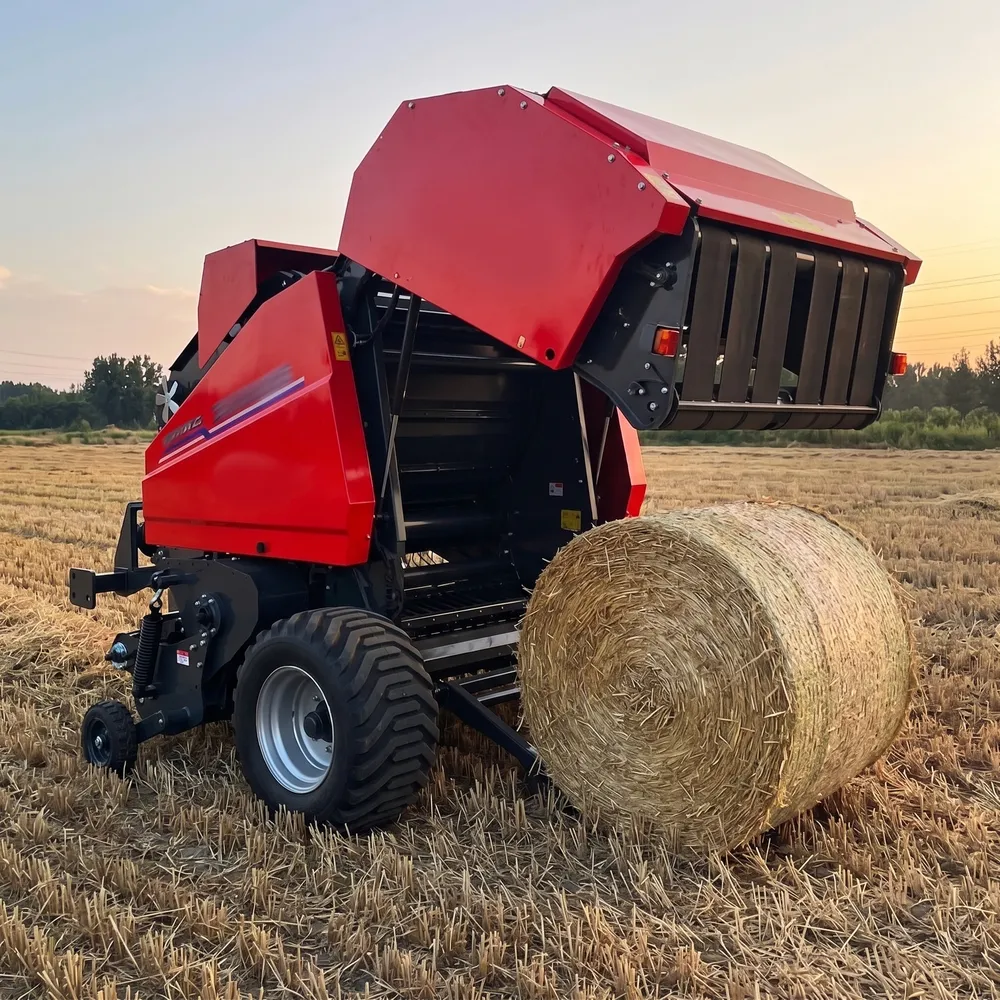
After net wrapping is complete, the rear gate opens hydraulically and the finished bale rolls cleanly onto the field surface. The gate closes automatically, and the machine immediately begins forming the next bale without requiring the tractor to stop, a critical throughput advantage during peak harvest windows when weather conditions can change rapidly. This cycle repeats continuously, making the 9YQ-1950 one of the most efficient hay round baler machines available in its class for high-volume field operations.
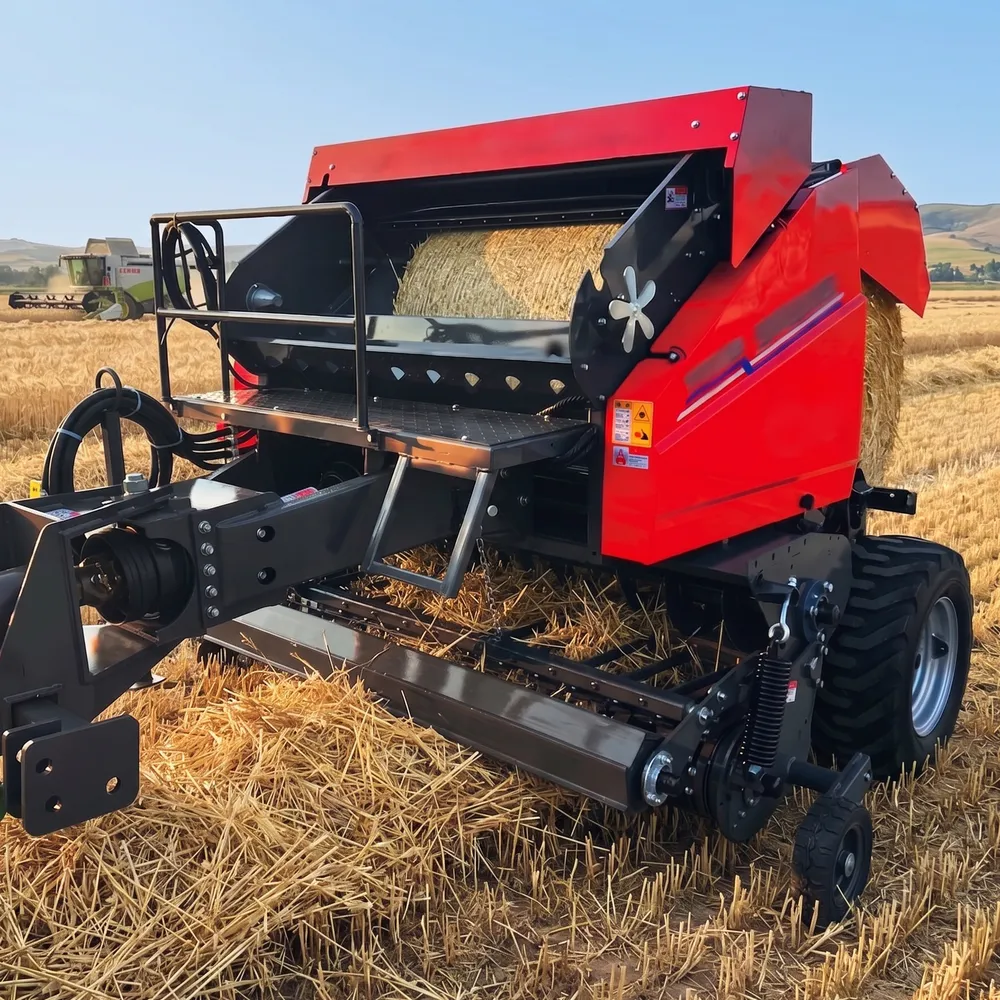
Application Areas
1. Rice Straw
Rice straw is notoriously difficult to bale due to its slippery surface and tendency to bunch unevenly. The combination of the spring-tooth pickup, shift-fork feed mechanism and screw continuous feeder ensures smooth, clog-free intake even in wet or tangled rice straw conditions. This makes the 9YQ-1950 a preferred round straw baler choice for paddy farmers across Southeast Asia, India and Sub-Saharan Africa seeking to eliminate field burning.
2. Wheat Straw
Wheat straw collection is one of the primary use cases for this round baler for hay and bedding. The 1,950 mm pickup width allows the machine to cover wide swaths laid by combine harvesters in a single pass, maximising field efficiency. Wheat straw bales from this small round baler for compact tractor application are ideal for livestock bedding, mushroom substrate, bioenergy feedstock and export markets across Europe and the Middle East.
3. Corn Silage
The 9YQ-1950 excels as a silage round baler for chopped whole-plant corn silage. The high-density 18-roller chamber ensures tight bale formation that limits aerobic spoilage, while the precise wrap-loop count seals each bale uniformly. Corn silage bales can be stored on-farm for months as a high-energy feed for dairy and beef cattle, making this round baler for silage a strong investment for livestock farms in North and South America.
4. Cotton Stalks
Cotton stalks present unique challenges: they are woody, coarse and variable in density across the field. The robust 18-roller round baler rollers and hardened round baler parts on the 9YQ-1950 handle this demanding application without premature wear. Baled cotton stalks are increasingly used as biomass fuel pellets or charcoal feedstock, and the round baler for corn stalks design principles that govern the compression chamber apply equally well to cotton residue management.
5. Pasture Grass
For dairy and beef operations reliant on stored forage, the 9YQ-1950 functions as a best round baler option for collecting and preserving mixed pasture grass. Whether wilted for dry hay baling or harvested at high moisture for wrapped silage, the machine handles both modes seamlessly. The automatic net wrap system delivers bale surface coverage quality that prevents spoilage at the exposed outer layer, ensuring high-nutrient feed retention through winter storage periods.
6. Sugarcane Tops and Trash
In tropical sugarcane-growing regions, post-harvest trash and leaf tops left in rows represent valuable biomass often wasted through field burning. The 9YQ-1950 round bale baler picks up and compresses sugarcane residue into dense, transportable bales suitable for bioenergy plants, paper mills or animal feed supplement production. The machine's robust hydraulic system and centralized lubrication ensure reliable performance in hot, humid cane-growing environments common in Brazil, India and Australia.
7. Alfalfa
Alfalfa is among the highest-value hay crops globally, and bale quality directly impacts market price. The precision bale-weight control of the 9YQ-1950 produces tight, uniformly dense round hay baler bales that preserve leaf fraction and protein content, the two key quality metrics alfalfa buyers measure. Round baler sizes of 1,000 mm diameter are widely accepted in hay export markets, making this machine a strong fit for certified hay exporters in Argentina, the United States and Central Asia.

Key Components of the Hay Round Baler
1. Spring-Tooth Pickup Reel
The 1,950 mm spring-tooth pickup reel is the first point of contact between the machine and the crop. Hardened steel spring teeth are individually mounted and flex on impact with soil, reducing breakage risk. The reel width matches wide combine swaths in a single pass, and hydraulic height adjustment protects teeth during headland turns. This is one of the round baler parts most exposed to wear and the 9YQ-1950's robust design extends tooth life through an entire harvest season.
2. Dual Feeder Assembly
The combined shift-fork and screw continuous feeding mechanism forms the transition zone between pickup and bale chamber. The shift fork manages initial crop intake while the screw ensures even distribution across the full chamber width. Together they handle dense, wet or tangled crops, including silage and reed, without bridging. This dual-stage design is a key differentiator compared with single-roller entry feeders found on lower-cost mini round baler designs.
3. 18-Roller Compression Chamber
Eighteen Phi-190 mm round baler rollers form the variable-diameter roll-drum compression chamber. Each roller is manufactured from high-strength steel and surface-treated for corrosion resistance. As bale size grows, the rollers expand outward against a spring tensioning system, maintaining consistent pressure throughout the bale build cycle. Replacing round baler belts and rollers on this platform is a straightforward process thanks to accessible roller mounting points and the centralized lubrication system.
4. Automatic Net Wrap System
The automatic round baler wrap dispensing and cutting unit feeds net material across the full bale width from a roll mounted in an accessible holder at the rear of the machine. The wrap arm spans the chamber without gaps, ensuring every bale surface layer is fully covered. The precision loop-count sensor terminates the wrap cycle at the exact set value, and the cut mechanism severs the net cleanly with minimal tail. Compatible with standard round baler twine and net wrap rolls available globally.
5. PTO Drivetrain and Clutch
Power is transferred from the tractor via the round baler PTO shaft to the machine's main gearbox. An internationally sourced overload clutch protects the drivetrain from sudden torque spikes caused by blockages or foreign objects entering the pickup. The chain drive transmission, fed by the automatic lubrication system, distributes power to the rollers, feeder and wrap systems simultaneously. PTO shaft compatibility covers the 36.7 to 110.3 kW tractor power range, including compact tractor round baler applications.
6. Electronic Control Unit (ECU) and Touchscreen
The ECU connects the displacement sensor, wrap counter, gate actuator and alarm systems into a unified machine management platform. The handheld color touchscreen provides the operator interface, displaying bale weight, wrap loop count, machine status and fault alerts in real time. Automatic and manual operating modes are selectable via the screen. The ECU firmware is updatable and diagnostic codes simplify fault-finding, minimising the need for dealer visits during busy harvest periods when every hour of round baler operation counts.
7. Hydraulic System and Gate
The dedicated hydraulic circuit performs three functions: pickup height adjustment, rear gate opening for bale ejection, and floating-force control for terrain following. Hydraulic cylinders are protected by inline pressure-relief valves to prevent damage from overload. The rear gate's hydraulic actuators open and close fully within seconds, enabling fast cycle times between bales. Hydraulic connections follow standard ISO quick-coupler specifications compatible with all major tractor hydraulic systems in the 36.7 to 110.3 kW power range.
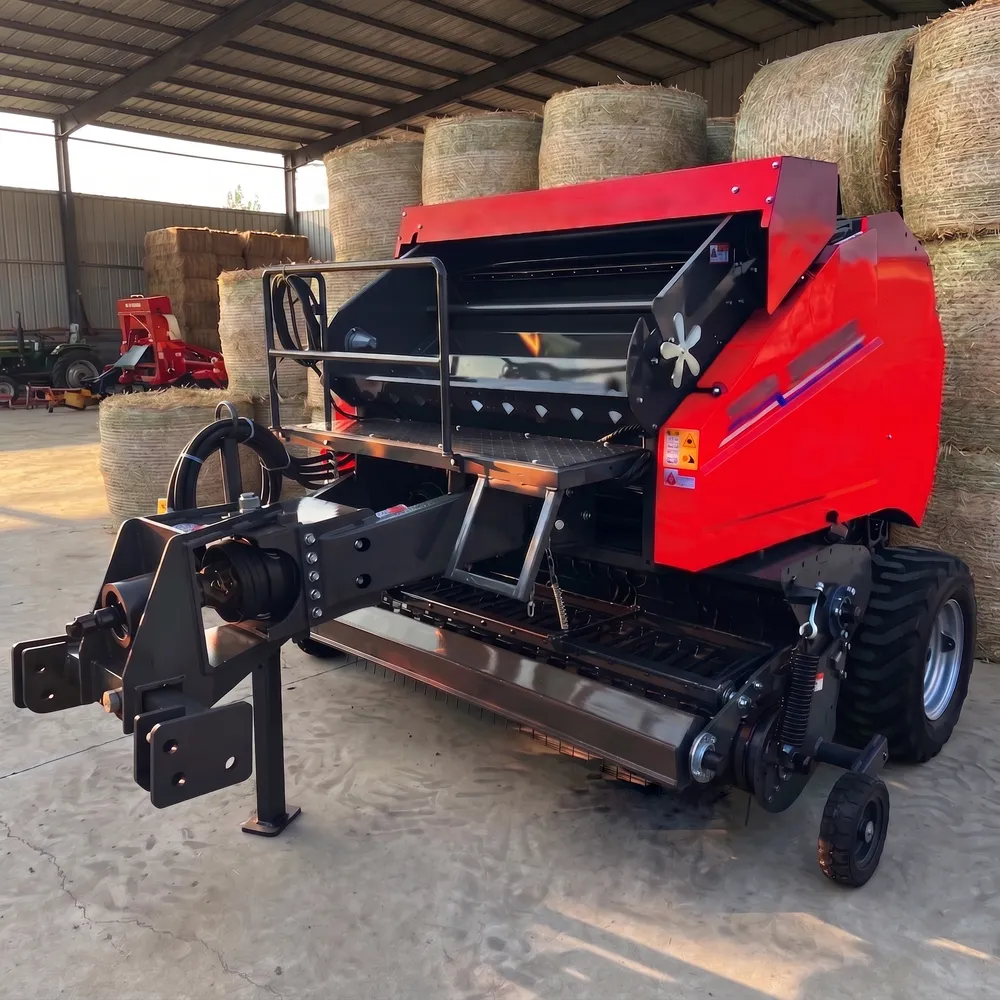
Round Baler Machine Operation Precautions
1. Pre-Operation Inspection
Before each daily shift, inspect all round baler belts, rollers, chain tension, PTO shaft guard integrity, hydraulic hose condition and net wrap roll seating. Check that all safety guards are in place and fastened. Verify that the touchscreen ECU powers up correctly and that no fault codes are active. Top up the centralized lubrication reservoir if the indicator shows low, and check hydraulic fluid level. Starting an operating session with a known fault risks cascading damage to expensive internal components.
2. Tractor Power Matching
Always match the tractor power to the rated range of 36.7 to 110.3 kW for the 9YQ-1950. When asking how big of a tractor for round baler applications, a general rule is to ensure the tractor provides at least 40 kW continuous PTO power under load. Under-powering the machine in dense crops causes repeated clutch slip, overheating and premature drivetrain wear. Over-powering beyond 110.3 kW can stress gearbox and frame components beyond their design limits, voiding warranty coverage.
3. Field Speed and Crop Volume Control
Maintain a consistent forward speed matched to the windrow volume entering the pickup. In heavy windrows, reduce ground speed to prevent feeder overload. In light or thin windrows, increase speed to maintain bale density and avoid under-filled bales with poor net-wrap integrity. Avoid sudden speed changes through crop quantity transitions, as this can cause uneven bale density layers that weaken the finished bale structure during storage and transport on round baler tires and trailers.
4. Bale Ejection Safety Zone
Always ensure the area behind the baler is clear of people, animals and obstacles before initiating the bale ejection sequence. A completed 1,000 mm diameter bale weighing several hundred kilograms rolls from the rear gate with significant momentum, particularly on sloping ground. Never allow bystanders within 10 metres of the rear gate during ejection. On slopes, position the baler so that ejected bales roll away from roads, water bodies and infrastructure. Engage the tractor parking brake during manual bale ejection in manual mode.
5. Blockage Clearing Protocol
If a crop blockage occurs in the feeder or pickup area, disengage the PTO immediately before any attempt to clear the obstruction. Never attempt to clear a blockage by hand while any part of the machine is rotating. Lower the pickup to its lowest position and use a long-handled hook or probe to remove the blocked material. After clearing, inspect the feeder and pickup for bent fingers or damaged components before re-engaging the PTO. Repeated blockages in the same location indicate a feeder adjustment or pickup height issue that should be diagnosed and corrected.
6. Net Wrap Storage and Handling
Round baler wrap and round baler twine rolls must be stored in a cool, dry location away from UV exposure before use, as degraded wrap tears during application and compromises bale integrity. When loading a new net roll, ensure it is correctly seated on the spindle and the leading edge is correctly threaded through the guide. In cold weather, allow wrap rolls to reach at least 10 degrees Celsius before use to prevent brittle tearing. Carry at least one spare wrap roll per operating day to avoid field stoppages mid-harvest.
7. End-of-Season Storage Preparation
At the end of each baling season, carry out a full service including roller bearing inspection, chain tension re-check, touchscreen ECU diagnostic read-out, hydraulic fluid change, and greasing of all centralized lubrication points. Remove any remaining net wrap from the dispenser to prevent moisture ingress. Inspect round baler rollers for surface wear and replace any showing deep grooving or flat spots before the next season begins, as worn rollers produce uneven bale density. Store the machine under cover or with a purpose-fitted tarpaulin to extend long-term service life.

Common Fault Troubleshooting
1. Feeder Blockage / Crop Not Entering Chamber
Symptoms: Machine slows, PTO clutch slips, alarm activates. Causes: Excessive windrow volume, damp or tangled crop, worn shift-fork fingers. Resolution: Disengage PTO immediately, clear the blockage manually, inspect and replace any bent feeder fingers. Reduce forward speed when re-entering the windrow. Check that pickup height is correctly set for the crop type being baled.
2. Bale Under-Density or Irregular Shape
Symptoms: Completed bale is soft, asymmetric or below target weight. Causes: Uneven crop flow to one side of the chamber, worn round baler rollers, roller spring tension loss, displacement sensor calibration drift. Resolution: Re-calibrate the displacement sensor via the ECU menu, inspect and re-tension roller springs evenly, replace visibly worn rollers, and ensure the screw feeder is distributing crop evenly across the full 1,250 mm chamber width.
3. Net Wrap Tearing or Failing to Cut
Symptoms: Net tears mid-wrap, wrap tail is not cut cleanly, wrap sensor fault code appears. Causes: Damaged or cold round baler wrap roll, misaligned net guide, worn cutter blade, sensor obstruction. Resolution: Replace the wrap roll with a fresh, room-temperature roll, clean and realign the net guide, inspect and sharpen or replace the cutter blade, and clear any crop debris obstructing the wrap sensor. Check that wrap loop count settings have not been reduced below the manufacturer minimum.
4. Hydraulic Gate Will Not Open or Closes Slowly
Symptoms: Rear gate stalls, bale ejection cycle times out on ECU. Causes: Low hydraulic fluid level, blocked hydraulic filter, air in hydraulic circuit, hydraulic hose kink or coupling leak. Resolution: Check and top up hydraulic fluid to the correct level, replace the hydraulic filter if it has reached its service interval, bleed air from the circuit, inspect all hose runs for kinks or chafing, and verify that tractor hydraulic supply pressure meets the minimum requirement for the 9YQ-1950 gate actuators.
5. Chain Drive Noise or Chain Slipping
Symptoms: Clattering sound from the drivetrain, intermittent power interruption to rollers or feeder. Causes: Chain wear or stretch, lubrication system blockage causing dry chain, sprocket tooth wear. Resolution: Check automatic lubrication reservoir level and flow to all chain lubrication points. Measure chain stretch with a pitch gauge and replace any chain sections exceeding 3% elongation. Inspect sprockets for hooked tooth profiles indicating wear, and replace matched chain-sprocket sets rather than individual components to prevent premature failure.
6. ECU Touchscreen Fault or Sensor Error
Symptoms: Screen shows fault codes, bale weight readings are erratic or frozen, automatic mode does not trigger wrapping. Causes: Displacement sensor connector corrosion or vibration damage, ECU power supply voltage fluctuation from tractor electrical system, screen connector loose. Resolution: Check and clean all sensor and ECU wiring connectors, verify tractor alternator output is stable at 12 to 14 V, re-seat the ECU power connector, and perform a full sensor re-calibration sequence from the ECU service menu. If fault persists, note the specific fault code and contact our after-sales technical team for remote diagnostic support.

Round Baler and PTO Shaft: Connection and Function
The round baler PTO shaft is the mechanical link that transfers engine power from the tractor to every driven system inside the baling machine. Without a correctly matched and maintained PTO shaft, no component of the round baler, pickup reel, feeder, compression rollers, net wrap system, or hydraulic pump, can operate.
The 9YQ-1950 uses a standard 540 RPM PTO connection, compatible with the vast majority of agricultural tractors in the 36.7 to 110.3 kW power range. Power enters the baler gearbox through the input stub shaft, where it is divided to drive the main roller chain transmission, the feeder assembly and the hydraulic pump simultaneously. The torque demands of the compression chamber, especially during peak density buildup, require a PTO shaft rated for the full output of the matched tractor. An undersized or worn round baler PTO shaft is a leading cause of unexpected field stoppages during harvest.
Key PTO shaft specifications for the 9YQ-1950 include the correct spline count (commonly 6-spline or 21-spline depending on tractor hitch class), telescoping shaft length to cover the full range of tractor-to-baler hitch distances, and a CE-certified friction or shear-bolt overload clutch to protect the baler drivetrain from sudden blockages. The overload clutch is particularly important when baling corn stalks, reeds, or other coarse materials where foreign objects occasionally enter the pickup.
Maintenance of the PTO shaft is closely connected to round baler performance. The telescoping inner and outer profiles must be greased at the recommended intervals, typically every 8 hours of baling operation, to prevent seizure under the torque reversals that occur when the overload clutch trips. The guard tube and its retaining chains must be inspected before each use, as a missing or damaged PTO shaft guard creates a serious entanglement hazard. When replacing a round baler PTO shaft, always match the shaft's power rating (kW at 540 RPM), spline size and collapsed length to the specific tractor-baler combination.
FAQs
Q: What tractor size do I need for the 9YQ-1950 round baler?
A: The 9YQ-1950 is designed to match tractors in the 36.7 to 110.3 kW (approximately 50 to 148 hp) range. For those asking how big of a tractor for round baler applications, a practical minimum is around 45 to 50 hp continuous PTO output to handle full-density baling without repeated clutch slip. Lighter tractors can operate the machine in thin crop conditions, but for heavy corn stalks, dense silage or reed baling, a tractor in the 75 to 100 kW range delivers the most reliable throughput and protects the drivetrain from overload stress.
Q: Can the 9YQ-1950 be used as a silage round baler?
A: Yes. The 9YQ-1950 handles both dry hay baling and silage round baler applications. For silage, the crop is baled at higher moisture content (typically 50 to 70%) and then wrapped in stretch film using a separate bale wrapper after ejection from the baler. The high-density 18-roller compression chamber produces a bale structure with low oxygen void space, which is critical for good fermentation in wrapped silage. The precision bale weight control also ensures consistent bale sizes that stack and handle evenly at the silage clamp.
Q: What is the finished bale size from the 9YQ-1950?
A: The bale chamber produces a cylindrical bale of 1,000 mm (1 metre) diameter and up to 1,250 mm width. This is one of the most widely accepted round baler sizes in global hay and silage markets, compatible with most bale handlers, flatbed trailers and export container loading equipment. Bale weight varies by crop type and moisture content, but for dry hay a typical bale from this machine weighs 400 to 600 kg, while silage bales at higher moisture can reach 700 to 900 kg.
Q: How do I replace round baler belts or rollers on this machine?
A: The 9YQ-1950 uses a roll-drum (fixed-chamber roller) design rather than a belt-type baling system, so it does not use the rubber baler belts found in variable-chamber round balers. The compression components are the 18 press rollers. Replacing round baler rollers involves opening the rear gate fully, unbolting the roller end bearing housings, sliding the roller out laterally and installing the replacement. The process typically takes 45 to 90 minutes per roller with basic hand tools. Our after-sales team supplies genuine replacement rollers and can provide a step-by-step guide. Contact us for current round baler parts pricing and availability.
Q: Is this a mini round baler or full-size machine? How does it compare with a small round baler?
A: The 9YQ-1950 sits between a true mini round baler and a large commercial round baler. It produces 1,000 mm diameter bales, smaller than the 1,250 to 1,650 mm bales of very large commercial machines, but significantly more productive than small round baler designs producing 600 to 750 mm diameter bales. For small to medium-sized farms, it offers an ideal balance: compact enough to be paired with a tractor in the 50 to 100 hp range (addressing the round baler for compact tractor market), yet producing full-size bales accepted at most livestock and hay markets worldwide.
Q: What type of round baler wrap or twine does this machine use?
A: The 9YQ-1950 uses standard agricultural net wrap (round baler wrap) as its primary bundling material. The net dispenser is compatible with rolls of standard width net wrap available from agricultural supply chains globally. The machine does not use round baler twine in its standard configuration, as net wrap provides faster application and better bale surface protection. If your application requires twine wrapping, please contact our sales team to discuss configuration options. Net roll width should match the 1,250 mm chamber width for full bale coverage.
Q: Can this round baler handle corn stalks?
A: Yes, the 9YQ-1950 is a proven round baler for corn stalks. The spring-tooth pickup and dual feeder mechanism handle coarse, woody material well, and the 18-roller compression chamber provides the compression force needed to form tight, dense bales from bulky corn residue. For optimal corn stalk baling, the stalks should be mowed and allowed to wilt for at least 24 hours to reduce moisture content and prevent mould in storage. The overload clutch on the PTO drivetrain provides protection against the occasional metal debris found in corn fields.
Q: How does the round baler operation work in automatic mode?
A: In automatic mode, the operator sets target bale weight and wrap loop count via the ECU touchscreen, then drives through the windrow. The machine automatically monitors bale density via the displacement sensor, triggers the net wrap cycle when the target is reached, counts the set number of wrap loops, cuts the net, and opens the rear gate to eject the bale, all without manual intervention. The tractor can keep moving during the bale cycle in continuous-flow designs. A completion signal appears on the touchscreen and an audible alert confirms ejection, allowing the operator to focus on straight-line driving rather than machine monitoring.
Q: Do round baler manufacturers offer spare parts globally?
A: Yes. Mexico Round Baler Co., Ltd maintains an after-sales parts network that serves customers across more than 30 countries. Key round baler parts, including rollers, pickup spring teeth, feeder fork assemblies, wrap sensors and hydraulic components, are held in stock for fast dispatch. For markets with high round baler concentration, we work with regional distributors to hold local stock. When ordering spare parts, provide your machine serial number and the relevant ECU fault code or component description to ensure correct part matching. Our technical team can also advise on third-party compatible parts for components sourced from named OEM suppliers.
Q: What is the difference between a self propelled round baler and the 9YQ-1950?
A: A self propelled round baler integrates the baler unit with its own engine and drivetrain in a single self-moving machine, these are typically found only in the highest-end commercial segment and carry price tags several times higher than tractor-pull designs. The 9YQ-1950 is a trailed-type round baler that requires a separate tractor to supply motion and PTO power. This architecture is the standard choice for the global small and medium farm market because it shares the tractor investment across multiple implements. The operational flexibility of using one tractor for the round baler, a mower, a rake and other equipment on the same farm makes the trailed design far more economical for most operations.
Customer Reviews
James, Beef Farmer, United States
"We've been running the 9YQ-1950 on our corn and alfalfa operation in Kansas for about fourteen months now. It replaced an older small round baler we had for years and the difference in bale consistency is night and day. The touchscreen is actually intuitive, my son picked it up in an afternoon. Had a minor issue with the hydraulic gate being sluggish in the second week, but the support team helped us bleed the circuit over the phone and it's been perfect ever since. For the price versus what we were looking at from bigger brands, this is genuinely the best round baler I've owned."
Klaus, Grain and Livestock Farm, Germany
"I run a medium-sized farm in Bavaria with wheat and grass, and the 9YQ-1950 has really proven itself. The 18 rollers provide a uniform bale density that I hadn't expected in this price segment before. The automatic net wrapping system definitely saves material; I estimate we use about 15% less net wrap per season than before. Delivery was fast, documentation was complete, and the spare parts supply for round baler parts is well organized. A clear recommendation for anyone looking for a reliable round baler for a tractor."
Eduardo, Sugarcane Producer, Brazil
"On my sugarcane operation in Sao Paulo state, I tried two other round baler machines before settling on this one. The dual feeder system handles sugarcane trash so much better than single-auger designs. We started using it for silage round baler work on the grass between cane rows too, and it's brilliant for that. Bale weight control is accurate, we set a target and it delivers it. After 8 months of use including the whole cane season, the only things I've replaced are some routine round baler parts like grease and one spring on the pickup. Very solid machine."
Harjeet, Farmers Cooperative, India
"We ordered two units for our cooperative in Punjab. Delivery to the port took about 6 weeks which was acceptable given the distance, and the machines arrived well-packaged with no transport damage. The 1,950mm picking width is great for our wide rice swaths. First season baling rice straw, we found the automatic mode handled everything, our operators only needed a day of familiarization. The 4-star rather than 5 is just because the manual could be a bit more detailed on the ECU diagnostic codes. Machine performance itself is excellent for a machine at this price point."
Michael, Hay and Livestock Farmer, Australia
"Running this on a 75kW CLAAS tractor here in Victoria. Suits the compact round baler for compact tractor market perfectly, it doesn't need a massive rig. We do mixed grass hay and oaten hay and both bale beautifully. Bales are consistently 1000mm and come out tight every time. The centralized lubrication is a revelation, I used to spend ages greasing the old machine individually. I had a query about replacing round baler belts, contacted the after-sales team and they got back to me within 24 hours with a detailed guide and a quote. That kind of support makes a real difference when you're mid-harvest."
Sergey, Grain and Silage Farm, Russia
"Our farm is located in the Saratov region and we use the 9YQ-1950 for corn silage and wheat straw. The machine works very reliably even at temperatures below zero. The lubrication system is one of the best features, because we don't have time to grease each bearing individually during harvest. Over 2 seasons of operation, there hasn't been a single serious breakdown. The PTO shaft came included with the machine and fit our tractor perfectly. We recommend it to anyone looking for a reliable round baler machine at a reasonable price."
Valentina, Alfalfa Producer, Argentina
"I farm alfalfa in Mendoza and was looking at round baler for sale options for months before choosing this. The specifications stood out, 18 rollers is more than most competing machines in this price category, and the precision weight control matters a lot for us because we sell into export markets where buyers measure bale consistency. Three cuts in and every single bale has hit our 580kg target weight within about 5%. The automatic net wrap system hasn't missed a single bale. Shipping logistics were arranged by the supplier and the machine arrived in perfect condition. Very impressed overall."
Pierre, Livestock Farmer, France
"We have been using this round baler machine since the 2024 season on our farm in Brittany for hay and silage wrapping. What I appreciate the most is the centralized lubrication system; it really changes your life compared to our old baler. The net wrap turn counting system is very precise, which has allowed us to significantly reduce our consumption of round baler wrap. Customer service was responsive when we needed advice on adjusting the displacement sensor. Robust machine, good build quality, excellent price-to-quality ratio for a round baler of this capacity."
Maria, Dairy Farm, Canada
"We have a dairy cattle farm in Saskatchewan and were looking for a round hay baler machine that could handle both dry hay and wrapped silage. The 9YQ-1950 does both very well. The color touch screen is easy to use even with gloves on cold days. The hydraulic pickup bar adjustment system is precise and helps us a lot in our fields with uneven terrain. We've been using it for 11 months without major mechanical issues. The after-sales service sent spare parts to Canada without delays. We definitely recommend it as the best round baler in its price category."
Additional information
| Edited by | Yjx |
|---|